Stucco vs. Siding: Choosing the Right Exterior for Your Home
You are standing in the driveway, staring at the front wall of your house. A hairline crack creeps from a window corner, a gray streak runs from the gutter, and a chalky patch near the foundation was not there last spring. You have patched this wall before. Now you wonder whether stucco is worth keeping or whether siding would save the trouble.
Here is the short version on stucco vs siding. Neither material wins on its own. The right exterior depends on how it stands up to wind driven rain, salt air, and the humidity that hangs here for months. Stucco and siding both work on the northeast Florida coast, but they fail in different ways. We have pulled cracked stucco off a wall and replaced warped siding two doors down in the same week, so the real question is which one fits your wall, your exposure, and the upkeep you will actually do.
The Real Question Is How Each One Handles Water
Both materials live or die by how they manage water. Stucco is a hard shell of sand, cement, and lime troweled over a base, shedding water on the surface while letting the wall behind it breathe. Siding sheds water like roof shingles, with a drainage gap behind it. Get either one wrong and water gets trapped, and trapped water is the root of almost every exterior failure we see on the First Coast. With humidity above 70 percent much of the year and salt drifting well inland, a wall that lasts decades in a dry climate needs closer watching here.
How Stucco Holds Up Here
Stucco is hard, fire resistant, and forms one unbroken surface that handles sun and wind well once it cures. The trouble is movement and moisture. Block walls and wood framing expand and contract as temperatures swing, and rigid stucco shows that movement as cracks, usually at the corners of windows and doors where stress concentrates. Most are hairline lines you can barely fit a fingernail into. On their own they are cosmetic. The danger is what slips behind them.
On service calls we frequently find moisture staining and soft spots where wind driven rain pushed water through a crack and the wall behind never got to dry. In this humidity, trapped water feeds mildew and, over time, rots framing or rusts the metal lath under the coat. The chalky white film near the base, efflorescence, signals water moving through the wall. Traditional hard coat stucco over block handles our climate better than the foam backed synthetic systems, which trap water against the sheathing the moment one seal fails.
How Siding Holds Up Here
Siding gives the wall room to move, its biggest advantage on this coast. Each panel hangs with a little play, so seasonal expansion does not crack the surface the way it does with stucco, and a drainage gap behind it lets stray water run out. That is the theory. In practice, the material you pick matters more than anything else.
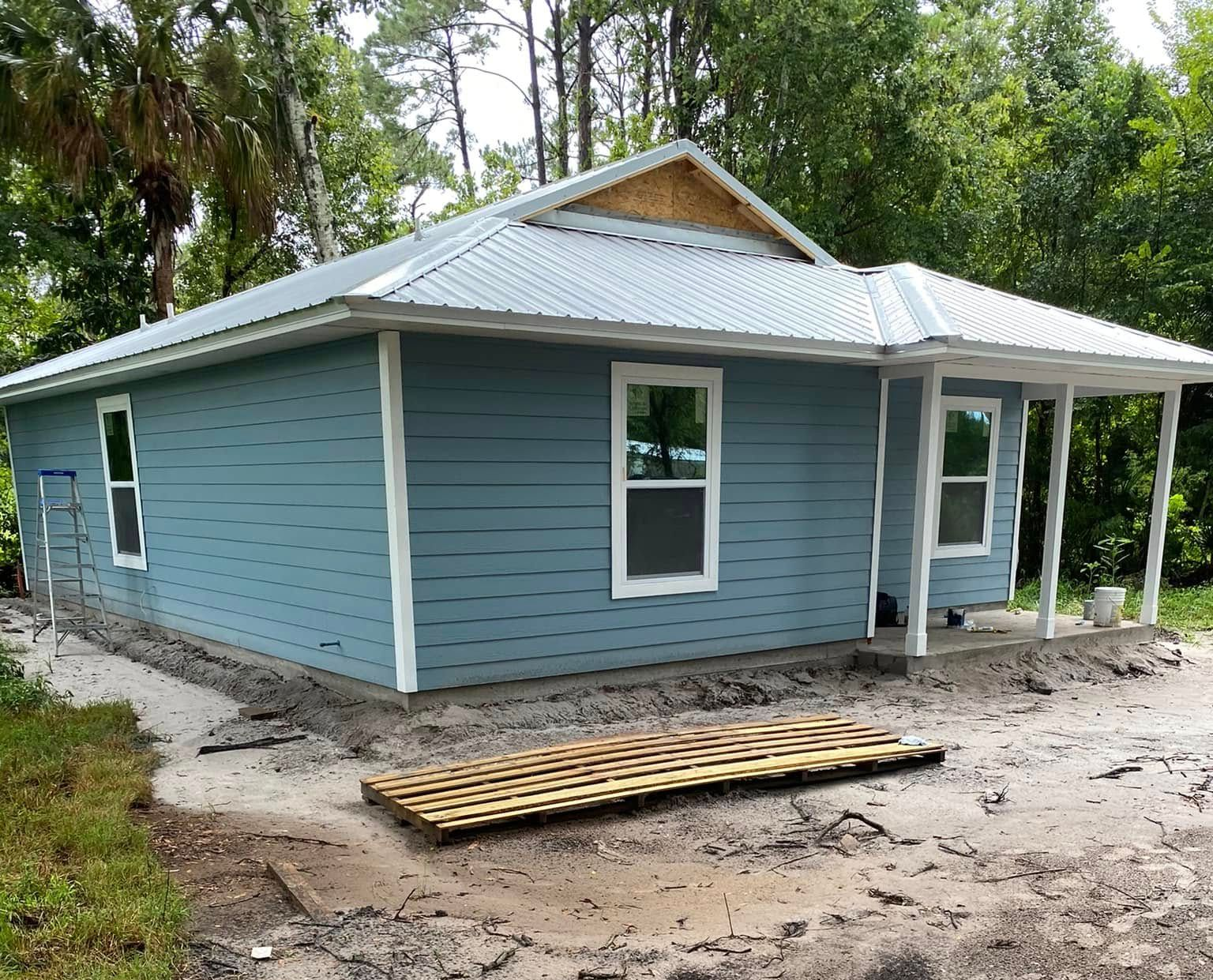
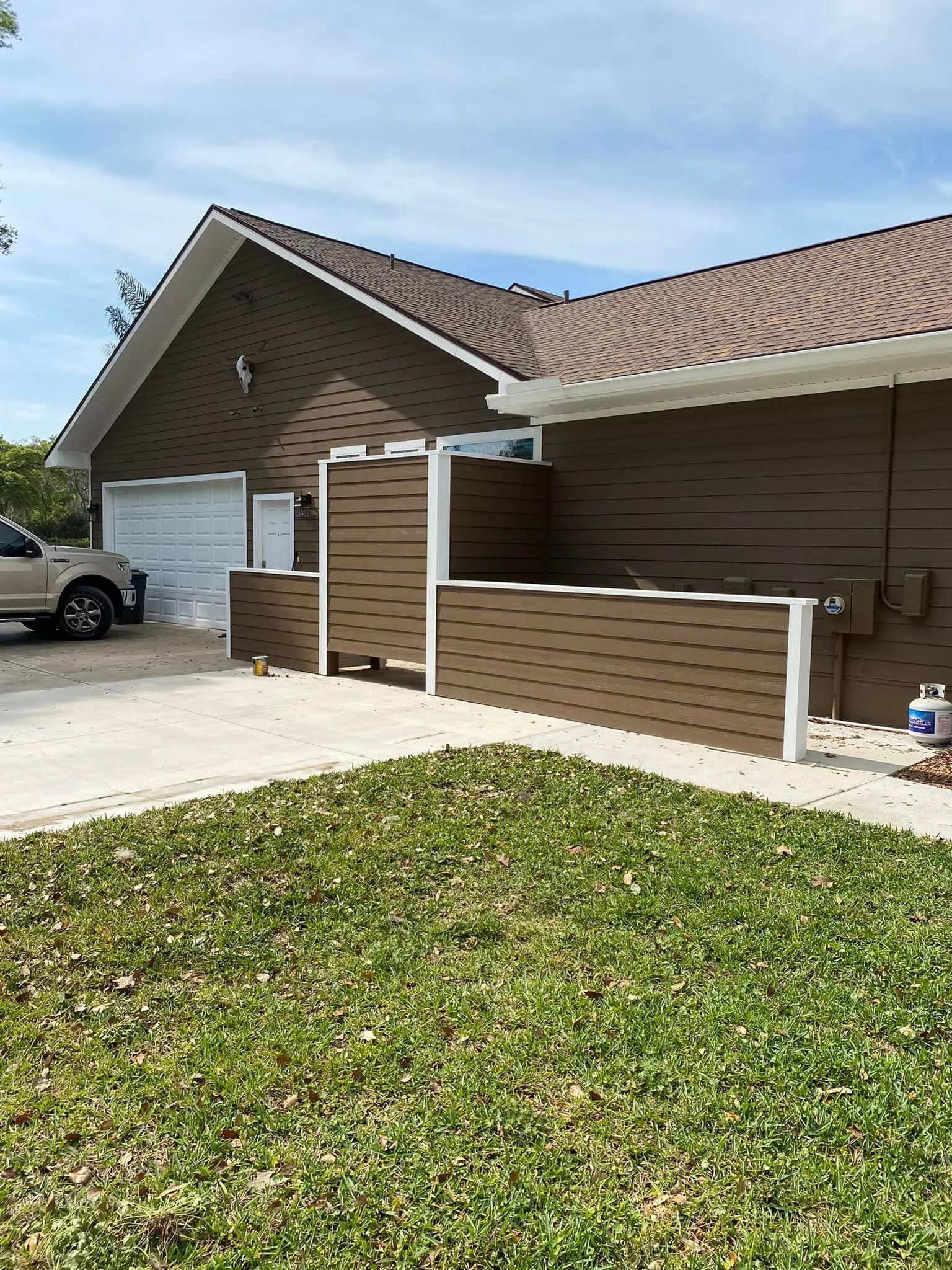
Vinyl is light and quick to install, but it warps in extreme heat and tears off in a strong storm when it is not fastened well. We have walked plenty of yards after a blow and found vinyl scattered across the lawn. Fiber cement is the workhorse we reach for on most coastal walls. It does not rot, salt does not corrode it, termites ignore it, and it holds strong wind ratings when nailed off right. Wood siding looks beautiful and ages badly here, swelling, cupping, and rotting within seven to ten years without steady upkeep.
Stucco vs Siding at a Glance
| What Matters | Stucco | Fiber Cement Siding |
|---|---|---|
| Look | Smooth, unbroken surface, classic coastal and Spanish styles | Clean lap or panel lines, paintable in any color |
| Movement | Rigid, cracks at stress points over time | Flexes with the wall, rarely cracks |
| Moisture | Sheds on the surface, hides leaks behind it | Drains behind the panel, trouble is easier to spot |
| Salt air | Holds up well, salt does not eat cement | Resists salt, will not corrode |
| Storm wind | Strong once cured, weak at existing cracks | High wind ratings when fastened right |
| Mildew | Grows on shaded, damp walls | Grows on the surface, washes off |
| Upkeep | Seal cracks early, watch the base | Repaint on a cycle, recaulk the seams |
| Repair | Patching is skilled work, color match is tricky | Swap a single board, repaint to blend |
What St. Augustine Weather Does to Both
The weather here decides more than the material does. Three things drive almost every exterior problem we see in St. Augustine: salt, humidity, and wind driven rain.
Salt rides the breeze in from the Atlantic and the Matanzas and works into fasteners, flashing, and bare metal. It does not bother cured stucco or fiber cement, but it quietly eats low grade nails and aluminum trim behind either one. Humidity is the slower problem. With the air this damp for months, walls dry out slowly, so any water that gets in stays longer and does more harm. North and east facing walls, the ones that catch the least sun, are where we find the worst mildew and the softest framing. Then there is wind driven rain, thrown sideways and finding any crack in stucco or gap in poorly lapped siding. A wall that shrugs off a drizzle leaks badly when the rain moves at forty miles an hour.
Keeping Either Exterior Healthy
Whichever exterior you have, the work is mostly catching water before it settles in. A few times a year, walk the perimeter and look from a foot away, not the curb, hunting for fresh cracks in stucco, loose siding panels, peeling caulk, and staining that points to a slow leak. Once a year, give it a gentle wash to clear the mildew our humidity grows on shaded walls, recaulk seams that have pulled away, and seal fresh hairline cracks before the next storm drives water in. After any tropical storm, walk the whole wall the same day when it is safe.
TIP: Wet a suspect stucco crack with a garden hose for a minute, then check the room behind it an hour later. A damp shadow inside means the crack is letting water through and needs sealing, not paint.
Where Homeowners Go Wrong
The most common miss is painting over a stucco crack instead of sealing it. Paint hides it but bridges the gap without filling it, so water keeps moving through and the wall behind stays wet while the surface looks fine. By the time the stain bleeds through, the framing may already be soft.
The second is pressure washing too hard. Blasting mildew off on a high setting drives water into the wall or chips the surface, opening fresh paths for moisture. A wider tip on a lower setting cleans as well. The last slip is waiting. A hairline crack feels like a someday problem, and on a dry coast it might be. Here, with this much salt and rain, someday shows up a lot sooner.
WARNING: If a stained wall feels soft, or a screwdriver pushes easily into the framing behind it, stop and have the wall opened up by a pro. Soft framing means the structure is already compromised, and hidden rot near a load bearing wall is not something to patch from the outside.
Frequently Asked Questions
Can you put new siding over existing stucco?
Yes, and we do it often on coastal homes here. We fasten furring strips through the stucco into solid framing, then hang siding over a drainage gap. Done right, it adds a fresh weather layer. Done wrong, it traps moisture against the old wall.
Which exterior lasts longer on a humid coast like this one?
Both can run for decades when maintained, but the deciding factor is upkeep, not the material. Neglected stucco cracks and leaks within a few years. Well sealed stucco and properly painted fiber cement both hold up against our salt and humidity.
Why does my stucco crack in the same spots every time?
Because those spots carry the most stress. Corners of windows and doors flex the most as the wall heats, cools, and settles, so a rigid coat fails there first. Sealing helps, but recurring cracks usually point to movement underneath worth checking.
When should I stop a DIY exterior fix and call a pro?
Stop the moment you find soft framing, spreading stains, or rot behind a panel, since those signal damage inside the wall. Anything above one story, or work near power lines and electrical penetrations, is also worth handing off for safety.
Does salt air near the St. Augustine beaches really damage siding?
It rarely harms fiber cement or cured stucco directly, but salt corrodes the metal holding everything together. Near Vilano Beach and Anastasia Island, we see rusted nails, eaten flashing, and pitted aluminum trim long before the cladding itself wears.
Protect Your Home With the Right Exterior System
Every exterior on this coast fails the same way, by trapping water it cannot dry out, so the smart move is choosing and maintaining whichever material keeps water outside your wall. That job is harder here than almost anywhere, because salt, months of humidity, and storms that throw rain sideways gang up on the same weak points. A crack you could shrug off inland becomes a leak within a season. At Davis Repair & remodel, we have spent more than 15years patching, sealing, residing, and rebuilding walls across St. Augustine, Florida. If your wall is cracking, staining, or just due for an honest look before storm season, contact us for stucco repair and we will tell you straight whether it needs a patch, a panel, or a fresh start.